Файл:The Mysterious Case of the Disappearing Dust.jpg




Опис файлу
| Опис |
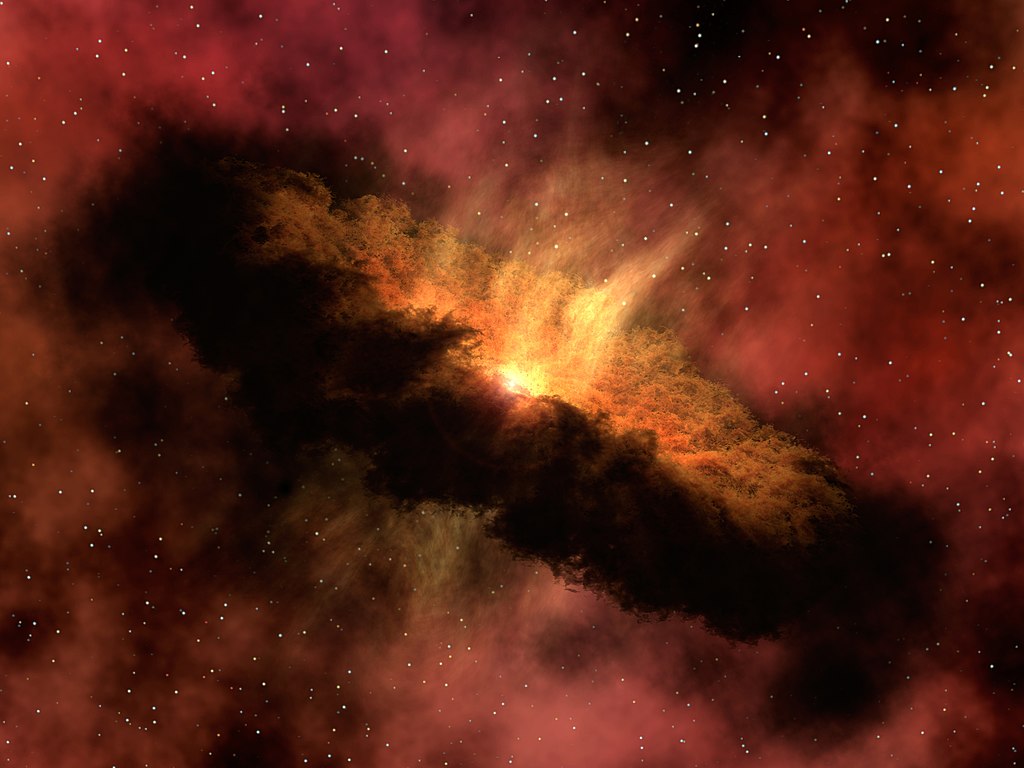
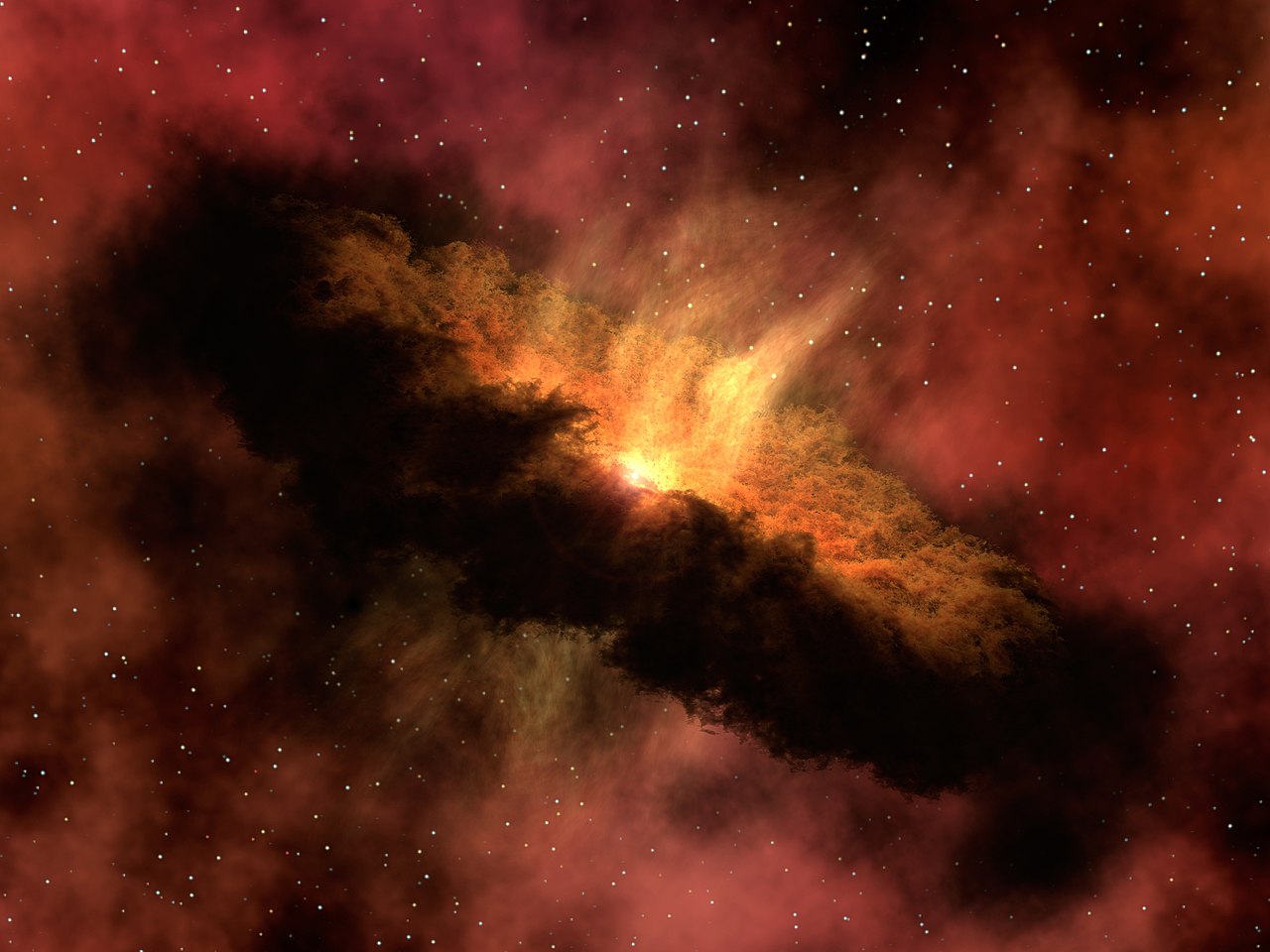
English: An artist's concept illustrates a dusty planet-forming disk, similar to the one that vanished around the star called TYC 8241 2652.
Imagine if the rings of Saturn suddenly disappeared. Astronomers have witnessed the equivalent around a young sun-like star called TYC 8241 2652. Enormous amounts of dust known to circle the star are unexpectedly nowhere to be found. "It's like the classic magician's trick: now you see it, now you don't. Only in this case we're talking about enough dust to fill an inner solar system and it really is gone!" said Carl Melis of the University of California, San Diego, who led the new study appearing in the July 5 issue of the journal Nature. A dusty disk around TYC 8241 2652 was first seen by the NASA Infrared Astronomical Satellite (IRAS) in 1983, and continued to glow brightly for 25 years. The dust was thought to be due to collisions between forming planets, a normal part of planet formation. Like Earth, warm dust absorbs the energy of visible starlight and reradiates that energy as infrared, or heat, radiation.Afrikaans: 'n Kunstenaarskonsep van 'n stowwerige planeetvormende skyf, soortgelyk aan die een wat rondom die ster genaamd TYC 8241 2652 verdwyn het.
Stel jou voor dat die ringe van Saturnus skielik verdwyn. Sterrekundiges het die ekwivalent rondom 'n jong sonagtige ster genaamd TYC 8241 2652 gesien. Enorme hoeveelhede stof wat bekend is om om die ster te sirkel, is onverwags nêrens te vinde nie. "Dis soos die klassieke towenaar se truuk: nou sien jy dit, nou nié. Net in hierdie geval praat ons van genoeg stof om 'n binneste sonnestelsel te vul en dit is regtig weg!" het Carl Melis van die Universiteit van Kalifornië, San Diego, gesê, wat die nuwe studie gelei het wat in die 5 Julie-uitgawe van die tydskrif Nature verskyn het. 'n Stowwerige skyf rondom TYC 8241 2652 is die eerste keer in 1983 deur die NASA Infrarooi Astronomiese Satelliet (IRAS) gesien en het 25 jaar lank helder gegloei. Daar is gedink dat die stof aan botsings tussen vormende planete te wyte was, 'n normale proses tydens planeetvorming. Soos die Aarde, absorbeer warm stof die energie van sigbare sterlig en straal daardie energie weer uit as infrarooi, oftewel hittestraling. |
| Час створення | |
| Джерело | https://www.jpl.nasa.gov/news/the-mysterious-case-of-the-disappearing-dust |
| Автор | NASA/JPL-Caltech |
Ліцензування

|
Цей файл перебуває у суспільному надбанні, оскільки він був створений NASA (Національним управлінням з аеронавтики і дослідження космічного простору). Згідно з політикою NASA стосовно авторського права, «матеріали NASA не захищаються авторським правом, якщо не вказано протилежне». (Див. Template:PD-USGov, сторінку політики NASA стосовно авторського права, або політику використання зображень JPL.) |  |
 |
Попередження:
|
Історія файлу
Клацніть на дату/час, щоб переглянути, як тоді виглядав файл.
| Дата/час | Мініатюра | Розмір об'єкта | Користувач | Коментар | |
|---|---|---|---|---|---|
| поточний | 20:56, 25 січня 2013 | | 3200 × 2400 (2,88 МБ) | wikimediacommons>Stas1995 | User created page with UploadWizard |
Використання файлу
Такі сторінки використовують цей файл:
