Файл:BSD data plot for elliptic curve 800h1.svg
Перейти до навігації
Перейти до пошуку

Розмір цього попереднього перегляду PNG для вихідного SVG-файлу: 436 × 296 пікселів. Інші роздільності: 320 × 217 пікселів | 640 × 434 пікселів | 1024 × 695 пікселів | 1280 × 869 пікселів | 2560 × 1738 пікселів.
Повна роздільність (SVG-файл, номінально 436 × 296 пікселів, розмір файлу: 5,07 МБ)
Опис файлу

| Опис |
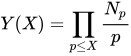
English: A plot of the type of data used by Birch and Swinnerton-Dyer to support their conjecture. The curve in question is y2 = x3 − 5x (curve 800h1 of the Cremona database). This is a curve of rank 1 (and one of the curves originally looked at by Birch and Swinnerton-Dyer). The horizontal axis is a bound X and the vertical axis is where Np is the number of points on the curve modulo p. The scale of the horizontal axis is log(log(X)) while the scale of the vertical axis is log(Y). The data should thus resemble a line of slope 1 (equal to the rank of the curve). The data points in blue are the points (X, Y(X)) where X runs through the first 100000 primes. The red line is a line of slope 1 for comparison purposes (the Y-intercept was simply chosen so that the line went through the data points). The data was computed and plotted using Sage. |
| Час створення | |
| Джерело | Власна робота |
| Автор | RobHar |
| Інші версії | File:BSD data plot for elliptic curve 800h1.png |


Ліцензування
Я, власник авторських прав на цей твір, добровільно публікую його на умовах таких ліцензій:


Цей файл ліцензований на умовах ліцензії Creative Commons Attribution-Share Alike 3.0 Unported
- Ви можете вільно:
- ділитися – копіювати, поширювати і передавати твір
- модифікувати – переробляти твір
- При дотриманні таких умов:
- зазначення авторства – Ви повинні вказати авторство, надати посилання на ліцензію і вказати, чи якісь зміни було внесено до оригінального твору. Ви можете зробити це в будь-який розсудливий спосіб, але так, щоб він жодним чином не натякав на те, наче ліцензіар підтримує Вас чи Ваш спосіб використання твору.
- поширення на тих же умовах – Якщо ви змінюєте, перетворюєте або створюєте іншу похідну роботу на основі цього твору, ви можете поширювати отриманий у результаті твір тільки на умовах такої ж або сумісної ліцензії.

|
Дозволяється копіювати, розповсюджувати та/або модифікувати цей документ на умовах ліцензії GNU FDL версії 1.2 або більш пізньої, виданої Фондом вільного програмного забезпечення, без незмінних розділів, без текстів, які розміщені на першій та останній обкладинці. Копія ліцензії знаходиться у розділі GNU Free Documentation License. |
Ви можете обрати ліцензію на ваш розсуд.
Історія файлу
Клацніть на дату/час, щоб переглянути, як тоді виглядав файл.
| Дата/час | Мініатюра | Розмір об'єкта | Користувач | Коментар | |
|---|---|---|---|---|---|
| поточний | 01:36, 27 березня 2011 | | 436 × 296 (5,07 МБ) | wikimediacommons>RobHar | Optimize file: remove unnecessary and redundant commands to reduce file size from 19 MB to 5MB. |
Використання файлу
Така сторінка використовує цей файл:
